

About
Hiring design talent for a fit and for a specific project is something organisations do not find easy. UX design applicants with an impressive set of art boards can unintentionally mislead non-specialists into being a great hire.
I know how to recruit for deeper skills, fit for the team, company and project, and I can even do this on a budget.
So read on to find out what’s my secret sauce.
The challenge
In a start-up environment with a predominantly development-based team, while the technical work was incredible, it became clear that we needed to invest time into enhancing UX quality for customer success with our B2C product.
Given the tight budget of a start-up, and the need for accelerated progress, we definitely required additional UX skills. We also needed to move fast, so the right candidate would have to hit the ground running and learn the product and business along the way.
What I didn’t know is what kind of person would apply, fit or eventually join.
My role
As the Product Owner at the start-up, I effectively wore many hats, including that of UX Director and Information Architect. I chose to take on the recruitment myself for two reasons:
- I have observed how non-UX personnel often struggle to hire for both fit and potential. A beautiful portfolio can be alluring but lack substance. UX requires a more logical, systematic and pragmatic approach to design than graphic design.
- I would be working closely with this person and wanted us to balance out each other’s strengths and skills.
Approach
- I identified what skills and types of work would be needed in the months ahead to achieve the business goals.
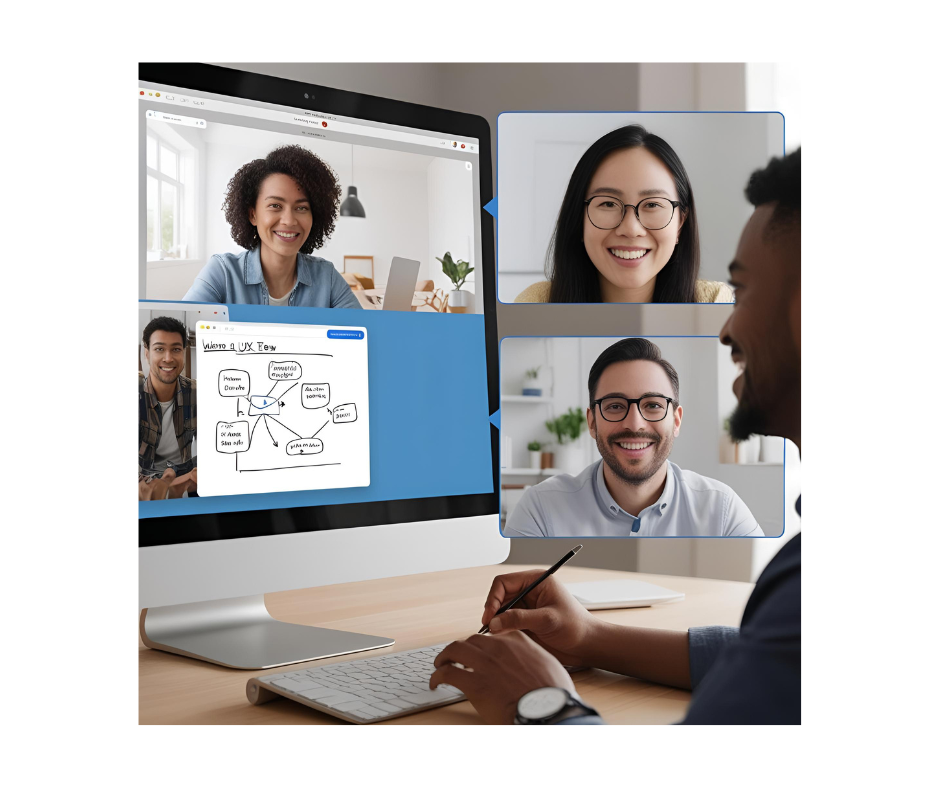
- I developed a realistic whiteboard task for the candidates to complete based on actual work in progress. The advantages of a real example are:
- It gives the candidates a taster of the work ahead, providing them the opportunity to get a real feel for the work and an instinct to decide if it is right for them. Often a person may want a job, but if the essence of the business does not excite them, it is not a good fit.
- The task helps me gauge their level of interest and enthusiasm in this line of work.
- It helps the SLT, or others who need to be consulted later in the process, to explore and discuss the candidates’ work in a familiar context.
- I developed the initial screener questions, naturally requested some type of portfolio and, recognising that this role would likely be 100% remote, requested a video demo because video calls were going to be how we spent a lot of our day designing and working with remote colleagues.
I value the potential in a junior UX/UI designer for:
- Solid base skills: e.g. UI basics, the ability to pull together Figma files quickly.
- Enthusiasm: Genuine interest not just in design but also in the company’s goals.
- Curiosity: Keen to solve problems, find better ways of doing things, or look up the person who can explain something.
A mid-level designer needs to demonstrate:
- Attention to detail: There should not be sloppy mistakes in delivery.
- Self-development: Is looking at developing their skills in one area or many, connecting with community practices.
- Next-level skills: Re-use of components, styles, and systematic approach to using or curating resources such as design libraries and tokens.
A senior UX designer needs to demonstrate:
- Problem solving with their UX e.g. How they thought through variants, not just the happy path.
- Business mindset: How their solution supports the business goal when other solutions could have also offered good UX.
- Next-level skills: This may be experience in a specialist area such as information architecture, motion design or user research, for example.
During the probation period, I look for evidence of:
- Fast learning: The ability to identify patterns in the company’s needs without being told the same information repeatedly.
- Curiosity: A growth mindset, asking questions like, “How does that work?” “How could we do it better?” “What are other people doing?” and showing this thinking when sharing their work.
- Initiative: Proactiveness in reaching out with questions, suggesting new ways not currently in use, and double-checking their own work.
- Organisational skills: I believe this is an undervalued skill for UX professionals. Creativity can be messy, but the source of truth needs to be clear and collaborative. Time management and prioritisation of tasks are essential.
Outcome
Through this recruitment process, I successfully hired two distinct designers who have both exceeded the company’s expectations and significantly contributed to its success. Both became valued members of the company.
Key learnings and reflections
- I spoke to many of the candidates in 15-minute screener calls, perhaps more than others would, to make sure I was casting the net as wide as I could. I drew the line at ones who had not submitted a reasonable example of work. I was surprised the quality varied enormously.
- I discovered a lot of UX and product design candidates are career transitioners. These people bring valuable transferable skills and life experience to the job and should always be considered.
- Being good at art and graphic design is never enough for a UX product designer.
- Creating a small simulation task of the day-to-day is an excellent way to recruit.
- It’s necessary to consider the whole person: their remote set-up. How to can support them if they are in a different place, timezone, living conditions or anything else to you or your other colleagues. It is a commitment to support someone’s mental health, income and career development and an important decision. I considered how I could keep them learning and interested as what you can offer that person as a manager is as important as what they bring.
- I didn’t always get the first person on my shortlist! Good candidates are snapped up quickly. However, I didn’t leave it too long to ensure I got one of my top three thereafter.
Conclusion
Recruiting strong UX designers is not only feasible but also rewarding. Finding the right person saves a vast amount time. Designing your recruitment for the role is a great tool in making sure this works well.
By focusing on deeper skills, cultural fit, and potential, I have built a talented team that enhances this start-up’s user experience.
This experience has reinforced the importance of a thoughtful recruitment strategy that prioritises the right qualities and a clear understanding of project needs.